

Dining Room Curtains: 12 Ideas and How to Choose the Right Ones
Length Where the hem ends Best for Float (recommended) ½ inch above the floor Most dining rooms; tailored and practical

The best dining room curtains are lined, floor-length panels in a fabric that can handle sun and the occasional spill. Hang them high and wide on a sturdy rod, then pick sheer, light-filtering or blackout fabric depending on when you eat in the room. Most dining rooms suit lined linen, cotton or velvet in a pinch pleat or ripple fold. Hang the rod 4–6 inches above the window frame and let the hem stop just above the floor so chairs and vacuums don’t catch it.
This guide covers how to choose dining room curtains and drapes step by step, then gives 12 ideas you can copy, from layered sheers to roman shades for small dining rooms.
Yes, in most homes. Dining room curtains soften a room that is usually full of hard surfaces like a wood table, chairs and a bare floor. That softness helps with echo during a dinner party. Curtains also cut glare on the table at sunset and give privacy at night, when a lit dining room is easy to see into from the street.
Skip them only if the window faces a private garden and you love the bare look. Even then, a simple sheer panel or a roman shade will soften the room without hiding the view.
Dining room curtains look best at floor length, with the hem about ½ inch above the floor. This “float” length looks tailored and keeps the fabric away from chair legs, crumbs and vacuum cleaners. Avoid a long puddle in a dining room. It collects dirt and gets caught when chairs are pulled out.
Sill-length or apron-length curtains (ending 4 inches below the sill) work only where something sits under the window, such as a radiator, a built-in bench or a sideboard. For more on sizes, see our guide to standard curtain lengths.
| Length | Where the hem ends | Best for |
|---|---|---|
| Float (recommended) | ½ inch above the floor | Most dining rooms; tailored and practical |
| Kiss | Just touching the floor | Formal rooms with little foot traffic near the window |
| Puddle | 2–6 inches pooling on the floor | Avoid in dining rooms; collects dirt, catches chairs |
| Apron | 4 inches below the sill | Windows above a radiator, bench or sideboard |
| Sill | At the window sill | Small or kitchen-adjacent dining areas |
Lined linen drapes give a dining room texture without feeling formal. The lining helps the fabric hang straight and protects it from fading. Choose a warm white, oatmeal or stone colour to go with wood furniture.
Velvet absorbs sound and light, which makes evening meals feel warmer and quieter. Deep green, navy or burgundy velvet drapes look rich against white walls. Keep the hem floating so the pile stays clean.
Hang sheer curtains on the inner rod of a double rod and lined drapes on the outer one. The sheers soften daylight and give daytime privacy, and the drapes close for dinner. See our custom sheer curtains for fabrics that pair well.
Roman shades sit inside or just above the window and take up no wall space beside it. That makes them a good fit for a small dining nook or a window behind a built-in bench. A flat fold looks modern, and a relaxed fold looks softer. Read our guide to roman shade styles to compare them.
Pair a roman shade for light control with stationary drapery panels on each side for colour and height. You get the function of a shade and the softness of curtains without needing panels that close.
Pinch pleats keep the folds evenly spaced, so the curtains look neat open or closed. They hang from rings that glide easily, which helps if you open and close them every day. Browse custom pinch pleat curtains.
Ripple fold drapes hang from a track in soft, even S-shaped waves. They suit modern dining rooms with large windows or sliding doors, and they stack tightly when open.
A west-facing dining room can get harsh evening sun right at dinnertime. A blackout or thermal lining blocks glare and keeps the room cooler in summer and warmer in winter.
A dining room with plain walls can carry a bold floral, stripe or plaid on the curtains. Pull one colour from the pattern into the chair cushions or table linen to tie the room together.
Curtains a shade lighter or darker than the walls make a room feel calm and larger. This works well in an open-plan home where the dining area flows into the living room.
In an open-plan space, a ceiling-mounted track with full-length panels can close off the dining area for a dinner party and open again afterward. Our guide to room divider curtains covers track and fabric choices.
Cafe curtains cover only the lower half of the window, so they give privacy at table height while letting light in above. They suit a casual dining nook next to the kitchen. See our custom cafe curtains.
Warm neutrals like ivory, oatmeal, taupe and soft grey are the safest choice. They flatter wood furniture and don’t compete with table settings. For more drama, pick a deep colour that already appears in the room, such as a navy rug or green chairs. A useful rule is to choose a curtain colour that is either close to the wall colour (calm) or clearly contrasting (statement), and avoid shades that are only slightly off.
They don’t have to match, but they should coordinate when you can see both rooms at once. In an open-plan space, use the same rod height, length and header style in both areas so the windows line up visually. Then vary the fabric or colour to give each zone its own feel. In separate rooms with a door between them, you can choose freely.
Drapes are lined, heavier and usually floor-length. Curtains are lighter and often unlined. A formal dining room used at night suits drapes, because the lining blocks light and adds weight to the folds. A bright, casual dining area suits lighter curtains or sheers. Our drapes vs curtains guide explains the difference in detail.
Good dining room curtains come down to three choices: how much light you want at mealtimes, a fabric that can live near the table, and a length that clears the floor. Floor-length lined panels with a float hem suit most dining rooms. Roman shades and cafe curtains solve small or casual spaces. Once the length and fullness are right, the colour and pattern are the fun part.
Want curtains made to your exact dining room windows? Book a free design consultation on Long Island, or order free fabric swatches to see colours in your own light.
Mount a ceiling track along the line between the two spaces and hang full-length panels from it. Close the curtains to create a separate dining room for guests, and open them to share the light the rest of the time.
No, but they should coordinate if you can see both rooms at once. Keep the rod height, length and header style the same so the windows line up, then vary the fabric or colour.
Warm neutrals like ivory, taupe and soft grey are the easiest to live with. For a bolder look, choose a deep colour already in the room, such as navy, forest green or burgundy, to tie the curtains to your rug or chairs.
Yes. Floor-length curtains are the most common choice for dining rooms because they make the ceiling look higher and the room feel finished. Hang the rod 4–6 inches above the window frame so the panels look tall.
Lined, floor-length curtains in an easy-care fabric suit most dining rooms. Pinch pleat or French pleat headers look formal, and ripple fold looks modern. Choose sheer or light-filtering fabric for daytime meals and lined or blackout fabric for evening dining.
They should come within about ½ inch of the floor. This float length looks tailored and keeps the hem away from chair legs and crumbs. Avoid puddling curtains in a dining room, because they collect dirt and catch on chairs.
Length Where the hem ends Best for Float (recommended) ½ inch above the floor Most dining rooms; tailored and practical
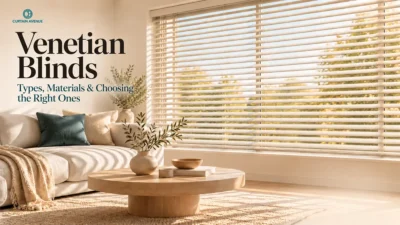
Window treatment How it’s built How you control light Best for Venetian blinds Horizontal slats on ladders Tilt slats +

Our design experts are here to help you find the perfect fit for your home.