Honeycomb Shades
Home » Honeycomb Shades
The most popular window treatment for good reason
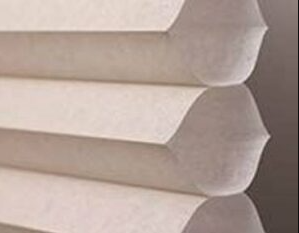
Our Honeycomb Shades (or cellular shades) come in multiple cell styles and a wide range of fabrics, textures, and light control options. The honeycomb shape — the most efficient in nature — is also the most insulating. They help keep a room cool in the summer and warm in the winter to maximize your home’s energy-efficiency. The unique design and tireless performance of these go-to shades have withstood the test of time.
Honeycomb & Cellular Shades
Honeycomb shades, also called cellular shades, are fabric window shades built from rows of hexagon-shaped cells. The cells trap air, so the shade insulates your window like a layer of padding. In U.S. Department of Energy testing, cellular shades cut heating energy by up to 20%.
At Curtain Avenue, we make honeycomb shades to fit your exact windows. Choose light-filtering or blackout fabric, then a cordless, top-down bottom-up or motorized lift. See every option at our Huntington Station showroom on Long Island.
What are cellular shades?
Cellular shades are window shades made from two or more layers of pleated fabric, bonded into a honeycomb pattern. Seen from the side, each pleat is a small air pocket. That trapped air slows heat moving through the glass, keeping rooms warmer in winter and cooler in summer.
The names “cellular shades”, “honeycomb shades”, “cellular blinds” and “honeycomb blinds” all mean the same product. Unlike blinds, they have no slats to tilt. You raise or lower the fabric to control light.
Single cell vs. double cell: which is better?
Double-cell shades insulate better and block more sound. Single-cell shades are lighter and cost less. Choose by room and climate. On Long Island, double cell is worth it for north-facing rooms and large windows.
| Type | Insulation | Light control | Best for |
|---|---|---|---|
| Single cell | Good | Light-filtering or blackout | Bedrooms, offices, most windows |
| Double cell | Better: two air pockets | Softer, more even light | Large windows, drafty or north-facing rooms |
| Blackout cell (foil-lined) | Very good | Blocks nearly all light | Bedrooms, nurseries, media rooms |
Cell size also matters. Smaller cells (about 3/8 inch) suit small windows and give a neat, fine pleat. Larger cells (about 3/4 inch) suit tall windows and give a bolder look.
Do cellular shades really save energy?
Yes. In tests at a research home in Knoxville, Tennessee, Oak Ridge National Laboratory found cellular shades saved up to 20% on heating energy. They saved up to 15% on total heating and cooling, compared with windows with no shades. The figures come from a U.S.
Department of Energy fact sheet.
The savings depend on fit. A shade mounted inside the frame, with small side gaps, traps the most air. That’s why we measure every window ourselves.
Light-filtering vs. blackout honeycomb shades
Light-filtering shades soften daylight and give privacy. Blackout shades block nearly all light. Pick by how you use the room.
Light-filtering: a soft, even glow with no glare. People outside can’t see in by day. Best for living rooms, kitchens and offices.
Blackout: a foil or opaque lining inside the cell blocks almost all light. Best for bedrooms, nurseries and media rooms.
Day/night (dual) shades: one headrail holds a light-filtering shade and a blackout shade. Pull down whichever you need.
Cordless, top-down bottom-up and motorized options
You can choose how your shades open. Cordless lifts are the most popular. Top-down bottom-up lets light in while keeping privacy. Motorized shades open with a remote, an app or a voice assistant.
Cordless: lift or lower the bottom rail by hand. No dangling cords, so it’s the safer choice with children and pets.
Top-down bottom-up: lower the top to let daylight in while the bottom stays closed. Ideal for bathrooms and street-facing rooms.
Motorized: perfect for tall, wide or hard-to-reach windows. Set schedules so shades close on hot afternoons. Read our motorized shades guide or see Hunter Douglas PowerView.
Where honeycomb shades work best
Honeycomb shades suit almost every room. They work especially well where comfort and energy savings matter most.
Bedrooms and nurseries: blackout cells for better sleep (see our nursery guide).
Living rooms: light-filtering fabric cuts glare on screens.
Home offices: even light without hot spots.
Skylights and large windows: motorized shades reach where hands can’t.
For steamy bathrooms, pick a moisture-resistant fabric or choose faux wood blinds.
Are cellular shades still in style?
Yes. Cellular shades have a clean, simple profile that suits modern, transitional and minimalist homes. Today’s fabrics include linen textures, soft neutrals and woven looks.
Pair them with side drapery panels for a layered, finished look.
Custom honeycomb shades on Long Island
Curtain Avenue is a window treatment showroom at 470 Walt Whitman Road, Huntington Station, NY 11746. We design, measure and install custom honeycomb shades for homes in Nassau and Suffolk County. As a Hunter Douglas dealer, we offer premium honeycomb collections alongside our own custom lines.
- Book a free consultation in our showroom or at your home.
- Compare fabrics and cell types in your own window light.
- We measure every window for a tight, energy-saving fit.
- Our team installs the shades and sets up any motorization.
We serve Huntington, Melville, Dix Hills, Commack, Northport, Syosset, Woodbury, Smithtown and nearby towns.
Honeycomb shades FAQ
What are cellular shades made of?
Most cellular shades are made of spunlace or woven polyester fabric, pleated and bonded into cells. Blackout versions add a foil or opaque layer inside the cell
How do you clean cellular shades?
Dust weekly with a feather duster or a vacuum on low with a brush attachment. For spots, dab gently with a damp cloth and mild soap. To clear dust from inside the cells, use a hair dryer on the cool setting.
Are cellular shades better than blinds?
For energy savings, yes. The trapped air in each cell insulates far better than open slats. Blinds are better if you want to tilt slats to angle the light.
Are cellular shades good for bathrooms?
They can be, if you choose a moisture-resistant fabric and keep them away from direct shower spray. For very humid bathrooms, faux wood blinds are a safer choice.
What are double cellular shades?
Double cellular shades have two layers of cells stacked together. The extra air pocket gives better insulation and sound absorption than single-cell shades.
What are vertical cellular shades?
Vertical cellular shades have cells that run up and down and slide side to side. They are made for sliding glass doors and wide windows. See
How do you fix uneven cellular shades?
On most cordless shades, raise the shade fully, then lower it fully a few times to reset the cords. If one side still hangs low, the tension needs adjusting. Call us and our team will help.
Where can I buy custom cellular shades on Long Island?
Curtain Avenue measures and installs custom cellular shades from our showroom at 470 Walt Whitman Road, Huntington Station, NY. Book a free in-home consultation or call (631) 364-0360.