Vertical Blinds
Home » Vertical Blinds
Click Here
Sliding Door & Vertical Blinds
The best blinds for sliding doors open sideways, so you can walk through without lifting anything. Vertical blinds, panel track blinds and vertical cellular shades all stack to one side of the door. Each gives privacy and light control, and none blocks the handle or the track.
Curtain Avenue measures, makes and installs custom sliding door blinds for patio and sliding glass doors across Long Island. See every option at our Huntington Station showroom.
What are the best blinds for sliding glass doors?
The best blinds for sliding glass doors are vertical blinds, panel track blinds and vertical cellular shades. They open side to side like the door itself. Horizontal blinds and Roman shades work only on doors you rarely use, because you must raise them fully every time you go out.
| Option | How it opens | Light control | Insulation | Best for |
|---|---|---|---|---|
| Vertical blinds | Vanes rotate and stack to the side | Tilt vanes to angle light | Low | Busy family doors, budget-friendly |
| Panel track blinds | Wide fabric panels slide on a track | Fabric choice sets light level | Low to medium | Modern rooms, extra-wide doors |
| Vertical cellular shades | Honeycomb fabric slides side to side | Light-filtering or blackout | High | Drafty or sunny doors |
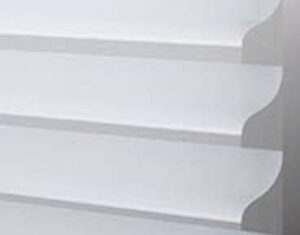
| Sheer vertical shades | Fabric vanes between sheer layers | Soft, adjustable glow | Medium | Living rooms that want a view |
| Motorized options | Any of the above, by remote or app | Same as the base product | Same as the base product | Large, heavy or hard-to-reach doors |
Vertical blinds for sliding doors
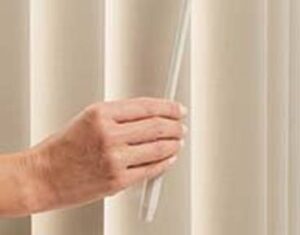
Vertical blinds are the classic choice for sliding doors. Long vanes hang from a headrail and rotate to let light in or block it. Pull the wand to stack the vanes to one side when you want to use the door.
Today’s vertical blinds come in vinyl, fabric and faux wood-look vanes. Fabric vanes look softer and quieter than the old rattling vinyl. They are easy to clean, and a single damaged vane can be replaced on its own.
Panel track blinds: the modern option
Panel track blinds use wide, flat fabric panels that glide on a multi-channel track. When open, the panels stack neatly behind each other. They suit modern homes, extra-wide doors and room dividers. Choose from sheer, light-filtering, woven or blackout fabrics.
Vertical cellular shades for energy savings
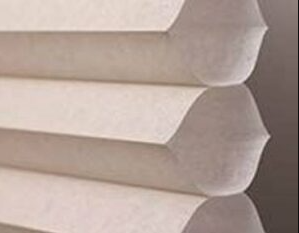
Vertical cellular shades are honeycomb shades turned on their side. The trapped air in each cell insulates the large glass of a sliding door. In U.S. Department of Energy testing, cellular shades saved up to 20% on heating energy. They are the best choice for drafty, north-facing or very sunny patio doors. Learn more about honeycomb shades.
Blinds vs. curtains for a sliding glass door
Blinds are best for light control and easy cleaning. Curtains are best for softness, insulation and style. Many homes use both: a vertical shade for daily light, with drapery panels on the sides. Read our full comparison or our patio door curtains guide .
Motorized and cordless sliding door blinds
Motorized sliding door blinds open and close from a remote, an app or a voice assistant.
They are ideal for wide, heavy doors and for closing out the afternoon sun on a schedule. Cordless and wand-controlled options remove loose cords, which is safer for children and pets. See our motorized buyer’s guide.
How to measure a sliding door for blinds
Most sliding door blinds are outside-mounted above the door frame, so the stack clears the glass.
- Width: measure the full width of the door frame, then add 3 to 4 inches on each side.
- Height: measure from where the headrail will mount down to the floor. Subtract about 1/2 inch so the blind doesn’t drag.
- Stack side: decide which side the blinds should gather on, usually the fixed panel of the door.
- Check clearance: make sure handles and door locks won’t catch the vanes.
Would you rather not measure? We measure every door for free during your consultation.
See our measurement guide.
Custom sliding door blinds on Long Island
Curtain Avenue designs, measures and installs blinds and shades for sliding glass doors, patio doors and French doors. Our showroom is at 470 Walt Whitman Road, Huntington Station, NY 11746, and we serve homes across Nassau and Suffolk County.
- Book a free consultation at home or in the showroom.
- Compare vertical blinds, panel tracks and cellular shades on site.
- We measure your door, including stack side and clearance.
- Our team installs and checks that everything glides smoothly.
Sliding door blinds FAQ
Can you put horizontal blinds on a sliding door?
You can, but they aren’t practical. You must raise them fully every time you open the door. Vertical blinds or panel tracks are a better fit for doors you use daily.
What is the difference between vertical blinds and vertical cellular shades?
Vertical blinds have separate vanes that rotate to angle light. Vertical cellular shades are one continuous honeycomb fabric that slides open. Cellular shades insulate much better, and blinds give finer light control.
Do roller shades work on sliding glass doors?
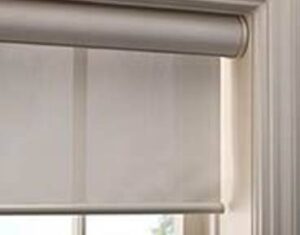
Yes. A single wide roller shade or two narrower ones can be mounted above the frame. Like horizontal blinds, they must be raised to use the door, so they suit doors you rarely open.
What are the best blinds for sliding doors with kids or pets?
Cordless, wand- controlled or motorized blinds are safest because there are no loose cords. Fabric vertical vanes also hold up better than vinyl to paws and small hands.
How much are blinds for sliding glass doors?
The cost depends on door width, product type, fabric and motorization. Vertical blinds are usually the most affordable, panel tracks sit in the middle, and motorized cellular shades cost the most. We quote every door after a free measure.
What window treatments work for doors over 8 feet wide?
Panel track blinds and vertical cellular shades handle extra-wide doors best. For very large or heavy spans, motorization makes daily use much easier.
How do you clean vertical blinds?
Dust the vanes weekly with a microfiber cloth or a vacuum brush. Spot-clean fabric vanes with mild soap and water, and blot rather than rub. Vacuum the headrail track now and then so the vanes slide smoothly.
Where can I buy sliding door blinds on Long Island?
Curtain Avenue makes and installs custom sliding door blinds from our showroom at 470 Walt Whitman Road, Huntington Station, NY. Call (631) 364-0360 for a free in-home measure.